From the blog
Creatine vs. Protein: Which Supplement Should You Take First?
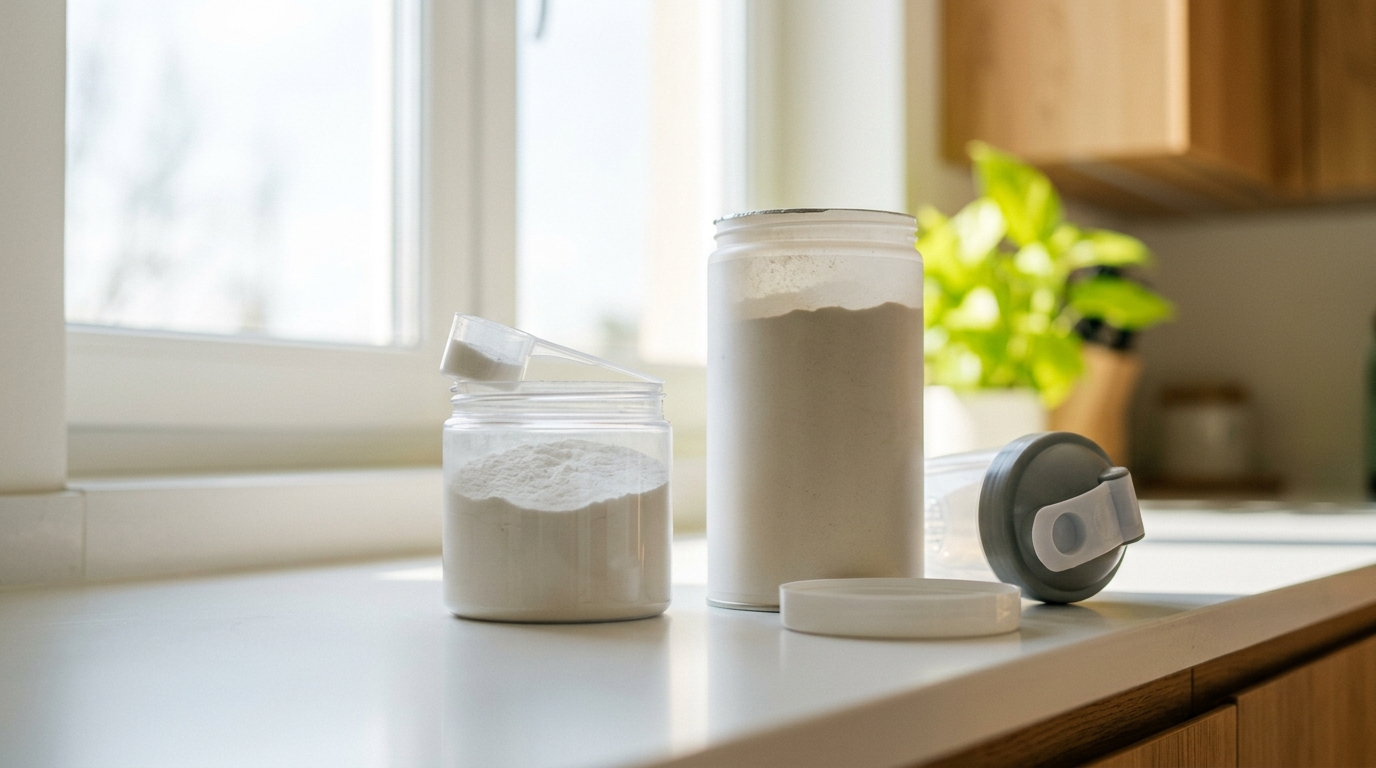
If you can only start with one supplement, take protein first. Protein directly supplies the amino acids your muscles need to repair and grow after training - without adequate protein intake, no other supplement works optimally. Creatine is the better second addition once your protein needs are consistently met.
That said, the full answer depends on your training goals, current diet, and what "first" actually means to you. Here's the complete breakdown so you can make a confident, informed decision.
What Each Supplement Actually Does
Creatine
Creatine is a naturally occurring compound stored in your muscles as phosphocreatine. It regenerates ATP - your body's primary energy currency - during short, explosive efforts like sprinting, heavy lifting, and high-intensity interval work. Supplementing with creatine (typically 3–5 grams of creatine monohydrate per day) increases your phosphocreatine stores by roughly 20–40%, allowing you to push out more reps, recover faster between sets, and accumulate more training volume over time. That extra volume is what drives strength and muscle gains.
Creatine does not directly build muscle. It creates the conditions for you to train harder so your body has a greater stimulus to build muscle.
Protein
Protein - whether from whole food or supplements like whey, casein, or plant-based blends - provides the raw amino acids that physically construct new muscle tissue. After resistance training, your muscles enter a state of elevated protein synthesis. If sufficient amino acids aren't available, that window closes without meaningful muscle repair or growth.
Most resistance-trained individuals benefit from 1.6–2.2 grams of protein per kilogram of bodyweight per day. A 180 lb (82 kg) person needs roughly 130–180 grams daily. Many people consistently fall short of that through diet alone, making protein supplementation a direct solution to a direct problem.
Creatine vs. Protein: 5 Key Differences
Factor Creatine Protein Primary function Replenishes ATP for explosive output Provides amino acids for muscle repair and growth Effect timeline Saturates muscles over 2–4 weeks Active within hours of each dose Diet dependency Vegetarians/vegans see larger gains (lower baseline) Everyone benefits if dietary intake is insufficient Non-responders Roughly 25–30% of people respond minimally Universal requirement - no non-responders Best for Strength, power, and high-volume training Any goal requiring muscle retention or growthWhen Creatine Should Actually Come First
There are specific scenarios where creatine takes priority over a protein supplement:
- You already hit your protein targets through food. If your diet consistently delivers 160+ grams of protein daily, adding a powder is redundant. Creatine fills a genuine gap that food rarely covers.
- You're a vegetarian or vegan. Plant-based diets contain little to no dietary creatine. A 2022 meta-analysis published in the Journal of the International Society of Sports Nutrition confirmed vegetarians experience significantly larger performance improvements from creatine supplementation than omnivores. The baseline is lower, so the ceiling for improvement is higher.
- Your primary goal is strength and power output. For powerlifters, sprinters, or athletes focused on maximal force production, creatine's performance impact is more immediate and measurable than marginal protein increases.
- You're on a tight budget. A quality creatine monohydrate supplement typically costs $20–$35 for a three-month supply. It's one of the most cost-effective performance supplements available.
When Protein Should Come First
- You're not hitting your daily protein target through food. This is the most common scenario. Track your intake for three days - if you're averaging under 1.4 g/kg of bodyweight, protein powder closes a real nutritional gap.
- You're in a caloric deficit or cutting phase. During fat loss, adequate protein intake preserves lean muscle mass. Creatine won't save muscle from a protein deficit.
- You're new to resistance training. Beginners experience rapid muscle protein synthesis with almost any training stimulus. Maximizing that window with sufficient amino acids produces the best early results.
- You're over 50. Age-related muscle loss (sarcopenia) accelerates after 50, and higher protein intake (closer to 2.0–2.2 g/kg) is one of the most evidence-backed interventions for maintaining muscle mass and functional strength.
Can You Take Both at the Same Time?
Absolutely - and most serious lifters do. Creatine and protein work through entirely different mechanisms, so they stack without interference. The classic approach is to mix 3–5 grams of creatine monohydrate directly into your post-workout protein shake. One habit, two benefits, no timing complexity.
If budget means you genuinely need to choose one, start with whichever addresses your biggest current gap. For most people who don't meticulously track diet, protein is that gap.
Timing: Does It Matter?
For protein, the post-workout window (within 1–2 hours after training) is well-supported for maximizing muscle protein synthesis. That said, total daily protein intake matters far more than precise timing. Hitting your daily target consistently outperforms perfect post-workout timing with inadequate total intake.
For creatine, timing is nearly irrelevant once your muscles are saturated (typically after 2–4 weeks of consistent daily use). Early research suggesting a strict post-workout window for creatine has not held up as a meaningful advantage. Take it when it's convenient - consistency over precision.
Which Form of Each Should You Choose?
Creatine: Creatine monohydrate remains the gold standard. It has more research behind it than any other form, including creatine HCL, buffered creatine, or ethyl ester. Skip the premium-priced alternatives unless you have a documented tolerance issue with monohydrate (rare).
Protein: Whey protein concentrate or isolate is the most researched and bioavailable option for omnivores. Whey isolate is lower in lactose and fat, useful if you're sensitive. For plant-based athletes, a pea-and-rice blend provides a complete amino acid profile comparable to whey. Avoid proprietary blends that obscure individual ingredient amounts.
The Bottom Line
Protein is the foundation. Creatine is the accelerator. Most people should establish consistent protein intake first, then layer in creatine once that habit is locked in. If you already eat enough protein through whole food, go straight to creatine - it's one of the few supplements with rock-solid evidence behind it across decades of research.
Neither supplement replaces a structured training program and recovery. But used correctly, together, they represent the two most evidence-backed additions you can make to any strength or muscle-building regimen.
Creatine Vs Protein FAQ
Can I take creatine and protein powder together in the same shake?
Yes. Mixing 3–5 grams of creatine monohydrate into a protein shake is one of the most practical approaches. The two supplements don't interact negatively, and combining them into one habit improves consistency.
Does creatine cause weight gain?
Creatine causes an initial increase in water retention within muscle cells - typically 1–3 lbs in the first two weeks. This is intramuscular water, not subcutaneous fat or bloating. Over time, the additional training volume creatine enables leads to genuine lean mass gains.
Is creatine safe for long-term use?
Yes. Creatine monohydrate has been studied continuously for over 30 years. Research consistently shows no adverse effects on kidney or liver function in healthy individuals at standard doses of 3–5 grams per day. People with pre-existing kidney conditions should consult a physician before supplementing.
How much protein do I actually need per day to build muscle?
The evidence-backed range for muscle building is 1.6–2.2 grams of protein per kilogram of bodyweight per day. A 175 lb (80 kg) person targets roughly 128–176 grams daily. Older adults and those in a caloric deficit benefit from staying toward the higher end of that range.
What if I'm a non-responder to creatine?
Roughly 25–30% of people see minimal performance benefit from creatine, typically because they already have naturally high muscle phosphocreatine stores (common in regular meat eaters). If you've used creatine monohydrate consistently for six weeks with no noticeable performance improvement, redirecting that budget toward protein or whole-food nutrition is a reasonable decision.