From the blog
Magnesium Forms Explained: Glycinate vs. Citrate vs. Oxide
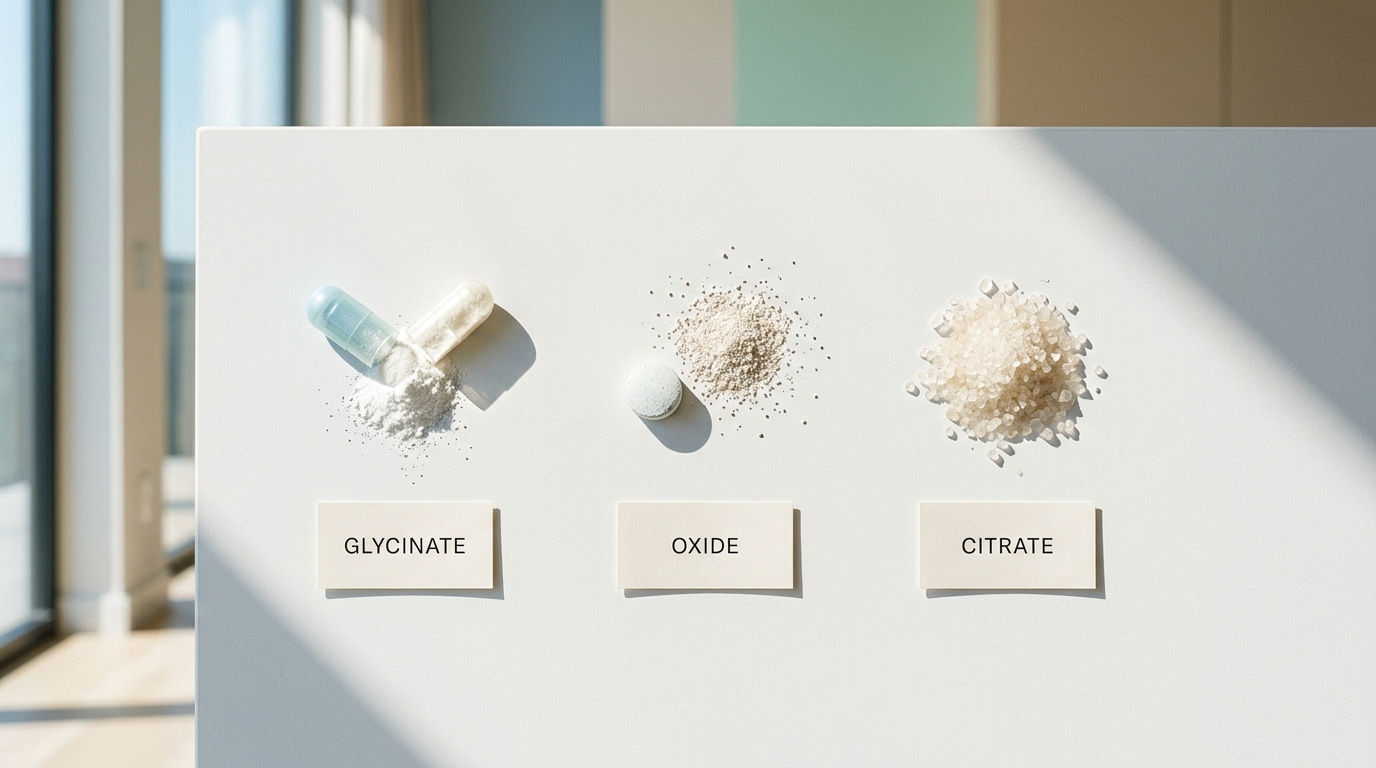
Not all magnesium supplements are equal. Magnesium glycinate absorbs best and causes the least digestive upset, magnesium citrate works well for constipation and general use, and magnesium oxide delivers the highest elemental magnesium per capsule but absorbs poorly - around 4% bioavailability compared to glycinate's estimated 80%+. The form you choose determines whether you actually benefit or just flush money down the drain.
Magnesium is the fourth most abundant mineral in the human body and participates in over 300 enzymatic reactions, including energy production, muscle contraction, nerve signaling, and DNA synthesis. Despite this, a large portion of adults don't meet the recommended dietary allowance (RDA) of 310–420 mg per day through food alone. Supplementation fills that gap - but only if you pick the right form.
Why Magnesium Form Matters More Than You Think
Every magnesium supplement pairs elemental magnesium with a carrier molecule - an organic acid, an amino acid, or an inorganic salt. That carrier determines three critical things: how much magnesium your gut actually absorbs, how fast it moves through your digestive tract, and which tissues it preferentially targets. Choosing the wrong form means buying a supplement your body largely excretes unused.
Magnesium Glycinate: Best for Sleep, Anxiety, and Sensitive Stomachs
Magnesium glycinate (also called magnesium bisglycinate) bonds magnesium to glycine, a calming amino acid. This chelated structure lets it absorb through amino acid transport pathways in the small intestine, bypassing the standard mineral absorption bottlenecks. Bioavailability sits significantly higher than oxide or sulfate forms - clinical estimates consistently place it above 80% absorption efficiency.
Who it's best for:
- People with anxiety or chronic stress who want magnesium's calming effect amplified by glycine's own inhibitory signaling in the central nervous system
- Anyone struggling with sleep onset or sleep quality - glycine independently lowers core body temperature, a known trigger for deeper sleep stages
- People with IBS, Crohn's disease, or a generally sensitive gut - glycinate rarely causes loose stools even at doses of 400 mg elemental magnesium
- Anyone who has experienced diarrhea from other magnesium forms and written off supplementation entirely
Typical dose: 200–400 mg elemental magnesium daily, often split morning and evening or taken as a single dose before bed.
Downside: Glycinate costs more per milligram of elemental magnesium than oxide or citrate. Capsules are larger and you need more of them to hit meaningful elemental magnesium levels because the glycine molecule adds molecular weight.
Magnesium Citrate: Best All-Rounder and Top Choice for Constipation
Magnesium citrate bonds magnesium to citric acid. It dissolves readily in water, which drives good absorption in the small intestine - bioavailability is estimated at 25–30%, lower than glycinate but far ahead of oxide. Its real competitive edge is its osmotic effect: it draws water into the colon, softening stool and stimulating bowel movement within 30 minutes to 6 hours at higher doses.
Who it's best for:
- People dealing with chronic constipation or irregular bowel movements
- Budget-conscious supplementers who want solid general magnesium support without spending on glycinate
- Athletes doing moderate supplementation who also want mild digestive regularity benefits
- People who prefer powder or liquid formats - citrate dissolves cleanly and tastes relatively neutral
Typical dose: 200–400 mg elemental magnesium daily for general supplementation; up to 1,000 mg as a short-term laxative (the clinical dose used before colonoscopy prep).
Downside: At higher doses, expect loose stools. If you're already prone to diarrhea or have IBS-D, citrate will make it worse. It's also not the best choice for pure sleep optimization since it lacks glycine's synergistic effect.
Magnesium Oxide: Cheapest, Most Common, Least Effective
Magnesium oxide is the form you'll find in most budget multivitamins and bargain-bin supplements. It contains the highest percentage of elemental magnesium by weight - around 60% - which makes it look impressive on a label. The problem is that its absorption rate hovers around 4%, meaning your body uses almost none of what you consume. The rest acts as an osmotic laxative and exits quickly.
Who it might work for:
- Short-term relief of occasional constipation or heartburn (it functions as an antacid)
- Situations where cost is the absolute primary constraint and any magnesium at all is better than none
Typical dose: 250–500 mg on the label, but only 10–20 mg actually absorbed - often not enough to move the needle on deficiency.
Downside: Almost everything. Low absorption, high laxative effect, little evidence of benefit for sleep, muscle recovery, or neurological function at typical doses. This is the form researchers used in some negative magnesium studies, which is part of why those studies showed weak results.
Head-to-Head Comparison: Glycinate vs. Citrate vs. Oxide
Factor Magnesium Glycinate Magnesium Citrate Magnesium Oxide Bioavailability ~80%+ ~25–30% ~4% Elemental Mg by weight ~14% ~16% ~60% Laxative effect Very low Moderate–high High Best use case Sleep, anxiety, deficiency Constipation, general use Antacid, cost-only situations Gut tolerance Excellent Moderate Poor Cost per effective dose High Medium Low (but ineffective) Glycine synergy (sleep) Yes No NoOther Forms Worth Knowing
Magnesium L-threonate is the only form with robust evidence for crossing the blood-brain barrier efficiently. A 2025 clinical study published in Magnesium Research found threonate supplementation raised cerebrospinal fluid magnesium levels more than other tested forms. It's expensive and best suited for cognitive support and neuroprotection goals rather than general deficiency correction.
Magnesium malate combines magnesium with malic acid, a compound involved in ATP production. Athletes and people with fibromyalgia-related fatigue report better energy and reduced muscle soreness. Bioavailability is solid and gut tolerance is good.
Magnesium taurate pairs magnesium with taurine, both of which support cardiovascular function and blood pressure regulation. It's a strong secondary choice for people specifically targeting heart health.
How to Dose Magnesium Correctly
The adult RDA ranges from 310 mg (women under 30) to 420 mg (men over 30) of elemental magnesium daily. Most people get 200–250 mg through diet, leaving a gap of 100–200 mg that supplementation covers. Start at 100–200 mg of elemental magnesium per day and increase gradually to minimize digestive adjustment. Taking magnesium with food slows absorption slightly but reduces the chance of nausea.
Don't be misled by the total milligrams on a label. A supplement stating "500 mg magnesium oxide" delivers roughly 20 mg of absorbable elemental magnesium. A supplement stating "200 mg magnesium glycinate" delivers approximately 160 mg of absorbable magnesium. Always check the "elemental magnesium" figure in the supplement facts panel.
The Bottom Line
For most people, magnesium glycinate is the best default choice - high absorption, excellent gut tolerance, and a sleep-supporting bonus from glycine. Magnesium citrate earns its place for constipation relief and budget supplementation. Magnesium oxide belongs in antacids, not in serious supplement stacks. Pick the form that matches your goal, verify the elemental magnesium content on the label, and dose consistently for at least four to six weeks before evaluating results.
Is magnesium glycinate or citrate better for sleep?
Magnesium glycinate is the stronger choice for sleep. The glycine component independently reduces core body temperature and promotes GABA activity in the brain, both of which accelerate sleep onset and improve sleep quality. Citrate lacks this secondary mechanism.
Can you take magnesium glycinate and citrate together?
Yes. Some people split their daily dose - citrate in the morning for digestive regularity and glycinate in the evening for sleep. Keep total elemental magnesium from all sources under 350 mg supplemental per day (the tolerable upper intake level set by the NIH for supplemental magnesium) unless directed otherwise by a clinician.
How long does magnesium supplementation take to work?
Noticeable effects on sleep and stress typically appear within one to two weeks of consistent dosing. Correcting a true magnesium deficiency confirmed by bloodwork takes four to eight weeks of daily supplementation at therapeutic doses.
Why does magnesium oxide cause diarrhea?
Magnesium oxide absorbs so poorly that most of it remains in the intestinal lumen, where it draws water in via osmosis. This excess fluid in the colon stimulates peristalsis and produces loose, watery stools. This is the same mechanism used intentionally in clinical bowel prep protocols - just an unwanted side effect when you're trying to correct a deficiency.
Does magnesium interact with medications?
Magnesium competes with calcium-channel blockers and can reduce absorption of certain antibiotics (tetracyclines, fluoroquinolones) and bisphosphonates when taken at the same time. Separate magnesium supplementation from these medications by at least two hours. Always review any new supplement with your prescribing physician if you take chronic medications.