From the blog
The Best Pre-Workout Ingredients Backed by Research
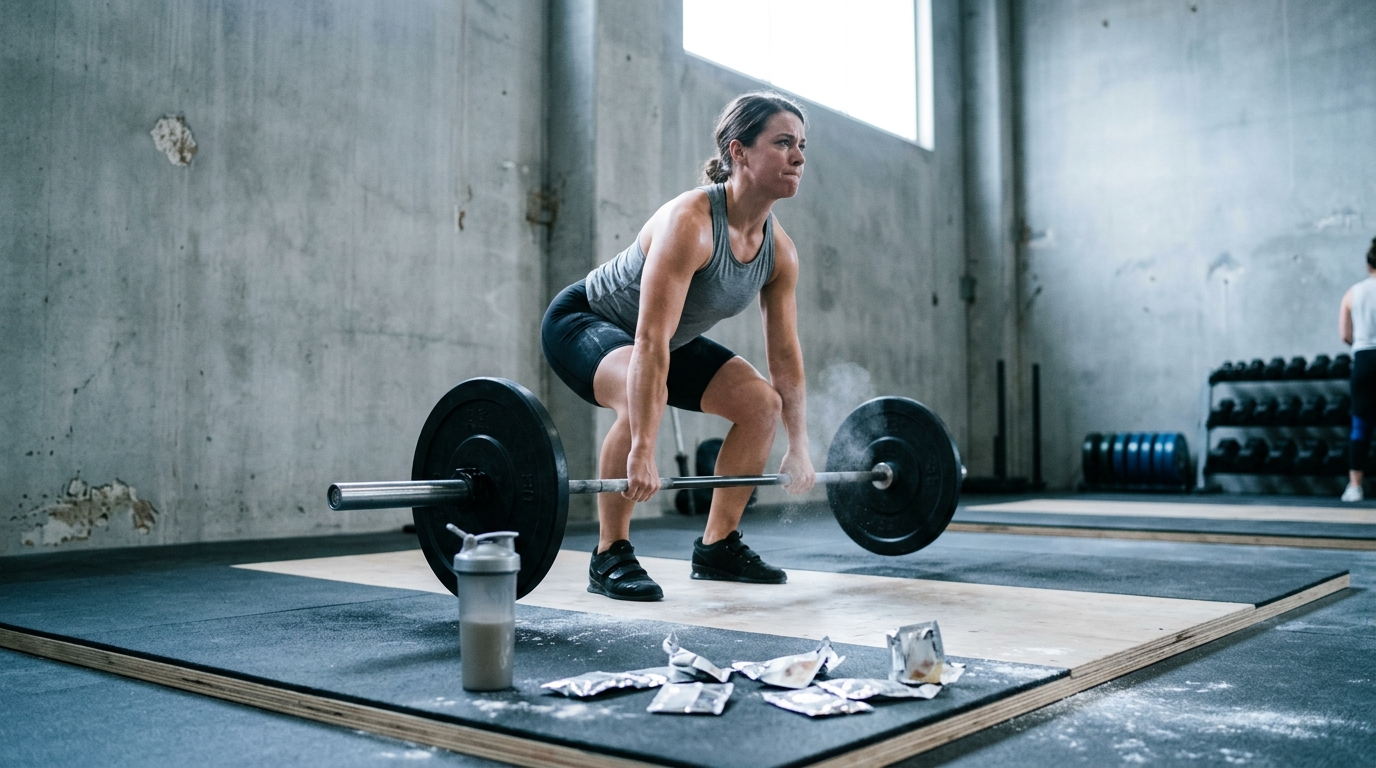
The most effective pre-workout ingredients are caffeine, creatine monohydrate, beta-alanine, citrulline malate, and betaine anhydrous - each with peer-reviewed evidence supporting performance improvements in strength, endurance, or power output. Here's exactly what the science says and what doses actually work.
Why Most Pre-Workouts Fail Before You Open the Bottle
The supplement industry is cluttered with proprietary blends that hide underdosed ingredients behind flashy labels. A formula can list every evidence-backed compound and still deliver zero benefit if each one is dosed at a fraction of the clinically studied amount. The solution is knowing which ingredients work, at what dose, and why - so you can evaluate any product on the shelf with confidence.
The 6 Best Pre-Workout Ingredients Supported by Research
1. Caffeine Anhydrous - The Gold Standard Stimulant
Caffeine is the most studied ergogenic aid in sports science. A dose of 3–6 mg per kilogram of bodyweight taken 45–60 minutes before exercise consistently improves endurance performance, anaerobic power, reaction time, and perceived effort reduction. For a 180 lb (82 kg) athlete, that translates to roughly 245–490 mg.
Caffeine works by blocking adenosine receptors in the brain, reducing the perception of fatigue. It also increases adrenaline release, which mobilizes fatty acids and primes the neuromuscular system. A 2024 meta-analysis published in the Journal of the International Society of Sports Nutrition confirmed that caffeine improves time-to-exhaustion by an average of 12% across endurance modalities.
Effective dose: 150–400 mg depending on bodyweight and caffeine tolerance.
Timing: 45–60 minutes pre-workout.
2. Creatine Monohydrate - The Most Proven Strength Compound
Creatine monohydrate has over 500 published studies supporting its safety and efficacy. It increases phosphocreatine stores in muscle, allowing faster ATP regeneration during high-intensity efforts - sprinting, heavy lifting, and explosive movements all benefit directly.
Unlike most supplements, creatine benefits accumulate over time rather than delivering an acute single-session effect, which is why timing matters less than consistency. A loading phase of 20 g/day for 5–7 days followed by a maintenance dose of 3–5 g/day saturates muscle stores faster, though a flat 5 g/day achieves the same result in approximately 28 days.
Effective dose: 3–5 g daily (maintenance).
Form: Monohydrate outperforms creatine HCl and ethyl ester in direct comparative studies on cost-to-benefit ratio.
3. Beta-Alanine - Muscular Endurance Buffer
Beta-alanine is a non-essential amino acid that combines with histidine in muscle tissue to form carnosine - a molecule that buffers lactic acid accumulation and delays the onset of muscular fatigue. Its primary benefit shows up in efforts lasting 60 to 240 seconds, making it particularly valuable for higher-rep training, HIIT, and combat sports.
The tingling sensation (paresthesia) that beta-alanine causes is harmless and dose-dependent. Splitting doses into 800–1,000 mg servings reduces it substantially.
Effective dose: 3.2–6.4 g/day (split into multiple doses).
Timeline: Benefits build over 4–6 weeks of consistent use.
4. L-Citrulline / Citrulline Malate - Pump and Endurance
L-Citrulline is converted to L-Arginine in the kidneys, raising plasma arginine levels more effectively than supplementing arginine directly. Higher arginine availability increases nitric oxide production, which vasodilates blood vessels, delivering more oxygen and nutrients to working muscle.
Citrulline malate (a 2:1 ratio of citrulline to malate) also participates in the Krebs cycle, potentially reducing ammonia accumulation and extending endurance capacity. A 2022 study in the European Journal of Sport Science found that 8 g of citrulline malate increased bench press repetitions to failure by 19% versus placebo.
Effective dose: 6–8 g of citrulline malate, or 3–6 g of pure L-citrulline.
Timing: 60 minutes pre-workout.
5. Betaine Anhydrous - Power and Muscle Endurance
Betaine (trimethylglycine) is a methyl donor derived from beets that supports creatine synthesis and cellular hydration. Research from 2013 onward has shown that 2.5 g/day of betaine supplementation over six weeks increased squat power by 20% and bench press power by 25% in trained athletes, as reported in the Journal of Strength and Conditioning Research.
Betaine also acts as an osmolyte, helping cells retain water during thermal stress, which supports performance in hot environments.
Effective dose: 2.5 g/day.
Best for: Strength athletes and those training in warm conditions.
6. Sodium Bicarbonate - The Underrated Acid Buffer
Sodium bicarbonate (baking soda) acts as an extracellular buffer, neutralizing lactic acid that accumulates during intense exercise. A dose of 0.3 g/kg bodyweight taken 60–90 minutes before training has shown consistent benefits in events lasting 1–8 minutes.
GI discomfort is the primary limitation, but splitting the dose across 30 minutes and consuming it with food reduces this significantly.
Effective dose: 0.2–0.3 g/kg bodyweight.
Best for: High-intensity interval training, rowing, cycling time trials.
Evidence Tier Comparison: Pre-Workout Ingredients Ranked
Ingredient Primary Benefit Effective Dose Evidence Tier Timing Caffeine Anhydrous Endurance, focus, power 3–6 mg/kg A (Strong) 45–60 min before Creatine Monohydrate Strength, muscle mass 3–5 g/day A (Strong) Daily (any time) Beta-Alanine Muscular endurance 3.2–6.4 g/day A (Strong) Daily (split doses) Citrulline Malate Blood flow, endurance 6–8 g B (Moderate) 60 min before Betaine Anhydrous Power, muscle endurance 2.5 g/day B (Moderate) Daily Sodium Bicarbonate Acid buffering, HIIT 0.2–0.3 g/kg B (Moderate) 60–90 min beforeIngredients to Skip (Despite Their Popularity)
- Arginine: Poor oral bioavailability. The body clears it too quickly to raise nitric oxide meaningfully - citrulline is strictly superior.
- Branched-Chain Amino Acids (BCAAs) pre-workout: If you consume adequate total protein daily, standalone BCAAs add no measurable benefit to training performance.
- Nitric oxide "boosters" under 3 g of citrulline: Below effective threshold - common in proprietary blends.
- Taurine at 500 mg or less: Some evidence for higher doses (2–3 g), but most formulas include trace amounts that accomplish nothing.
How to Build Your Own Evidence-Based Pre-Workout Stack
- Start with 3–5 g creatine monohydrate daily - this is non-negotiable for strength athletes.
- Add 200–400 mg caffeine 45 minutes before your session, calibrated to your bodyweight and tolerance.
- Include 6–8 g citrulline malate if blood flow and pump quality matter to you.
- Layer in 3.2 g beta-alanine if your training involves high-rep sets or conditioning work.
- Add 2.5 g betaine for additional power output - especially useful during strength-focused training blocks.
You can source each ingredient independently as a raw powder - this approach costs significantly less than branded formulas and gives you full control over dosing. Always verify third-party testing (NSF Certified for Sport or Informed Sport certification) before purchasing any supplement.
What is the most important pre-workout ingredient?
Caffeine is the single most impactful acute pre-workout ingredient, supported by decades of research showing 10–12% average improvements in endurance performance at 3–6 mg/kg of bodyweight. Creatine monohydrate rivals it for long-term strength adaptation but works through chronic accumulation rather than session-to-session acute effects.
Is it safe to take all these pre-workout ingredients together?
Yes. Caffeine, creatine, beta-alanine, citrulline malate, and betaine have all been studied in combination with no adverse interactions reported in healthy adults. The main cautions are caffeine sensitivity, which can cause elevated heart rate in susceptible individuals, and sodium bicarbonate, which causes GI distress at higher doses without a food buffer.
How long before a workout should I take pre-workout supplements?
Caffeine and citrulline malate peak in the bloodstream 45–60 minutes post-ingestion - take them 45–60 minutes before training. Sodium bicarbonate requires 60–90 minutes. Creatine and beta-alanine don't require precise timing because their benefits accumulate with daily use rather than single-dose peaks.
Does caffeine tolerance reduce pre-workout effectiveness?
Yes. Chronic daily caffeine use leads to adenosine receptor upregulation, which blunts caffeine's ergogenic effect over time. A 7–14 day caffeine washout period restores baseline sensitivity. Many high-performance athletes cycle caffeine - using it primarily on hard training days and competition days to preserve its effectiveness.
Are pre-workout supplements necessary for muscle growth?
No. Pre-workout supplements enhance training performance variables - energy, blood flow, endurance, and power output - but muscle growth depends primarily on progressive overload, total protein intake, and sleep quality. Supplements improve the inputs; they don't replace the fundamentals. That said, creatine monohydrate has direct evidence for increasing lean mass independent of training intensity increases.